
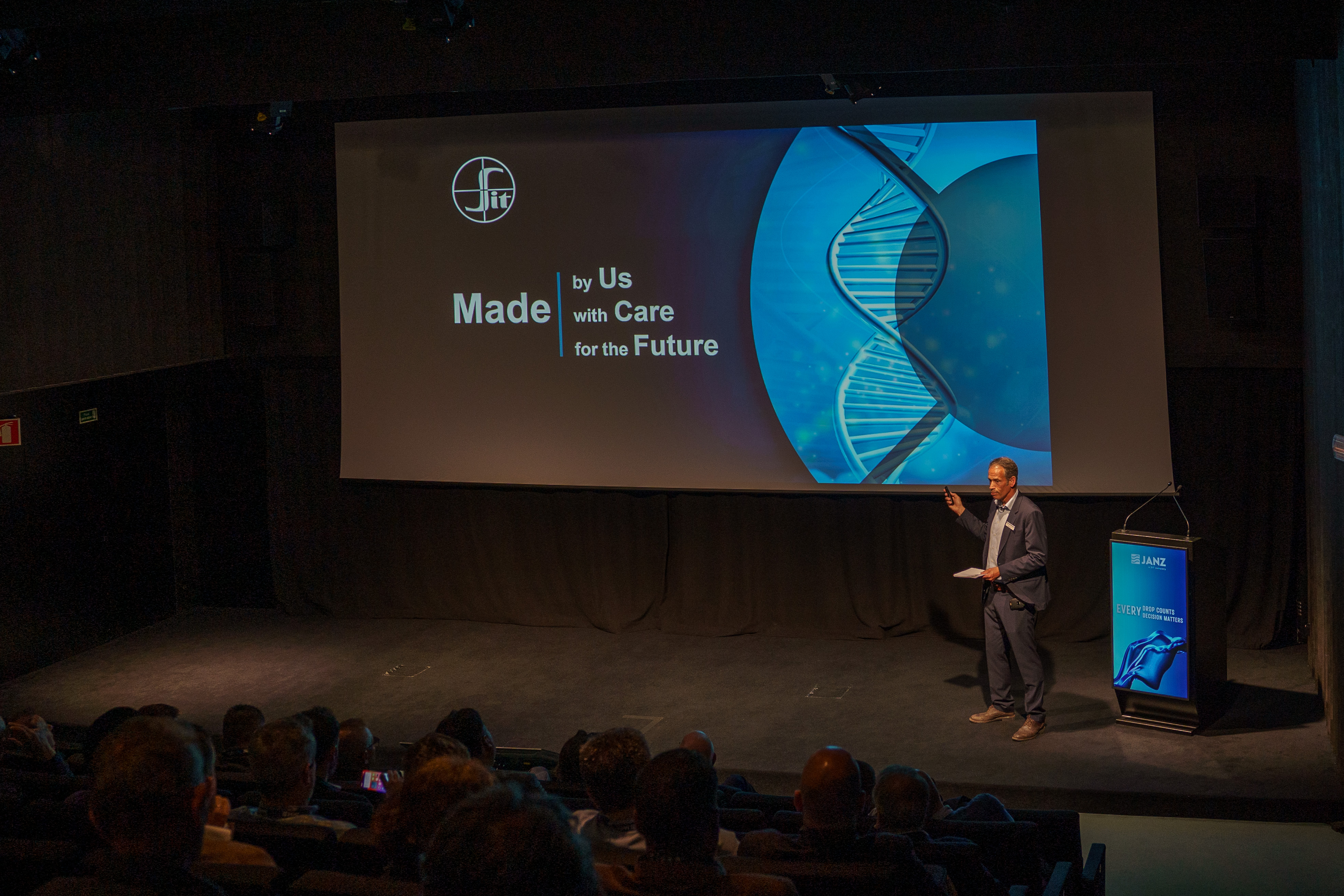
The exclusive event “Every Drop Count. Every Decision Matters.” took place at the Lisbon Oceanarium, where participants were able to observe and learn about SmartIO in this immersive environment. To mark this launch, on April 1st and 2nd, Lisbon became the epicenter of innovation in water supply services, welcoming more than 90 participants from water management entities in 9 countries and 4 continents. SmartIO is JANZ’s new smart ultrasonic water meter that promises to transform the management and monitoring of water consumption. This innovation will transform the way utilities manage water use, offering a series of technological and sustainable advantages.
The event was opened by the CEO and Chairman of the SIT Group (to which JANZ belongs), Mr. Federico de Stefani. He highlighted the decisive role of smart meters for a more sustainable and conscious management of water resources. These devices allow real-time monitoring of consumption, providing accurate data to both users and water system managers.

The event presentation was led by Ricardo Cordeiro, Sales and Marketing Director at JANZ. Some of the highlights were the data on the significant increase in the number of smart meters in Europe and North America, which shows that this is not a trend, but a reality. It is estimated that by 2028, Europe will have installed more than 105 million smart meters, representing a growth of more than 60% compared to the current reality, which will correspond to 72% of the installed park. America has historically installed more smart meters than any other region in the world, allowing it to currently have only 15% of unbilled water, while Europe has double that, 30%. An analysis of the evolution of the industry shows that in the past, operators had a reactive stance, where they detected leaks after they started, but they are currently adopting an efficiency control, monitoring the data obtained. However, the future requires evolution towards predicting and preventing events before they happen, highlighting the importance of utilities making their networks resilient, as well as efficient, to be successful in the future.
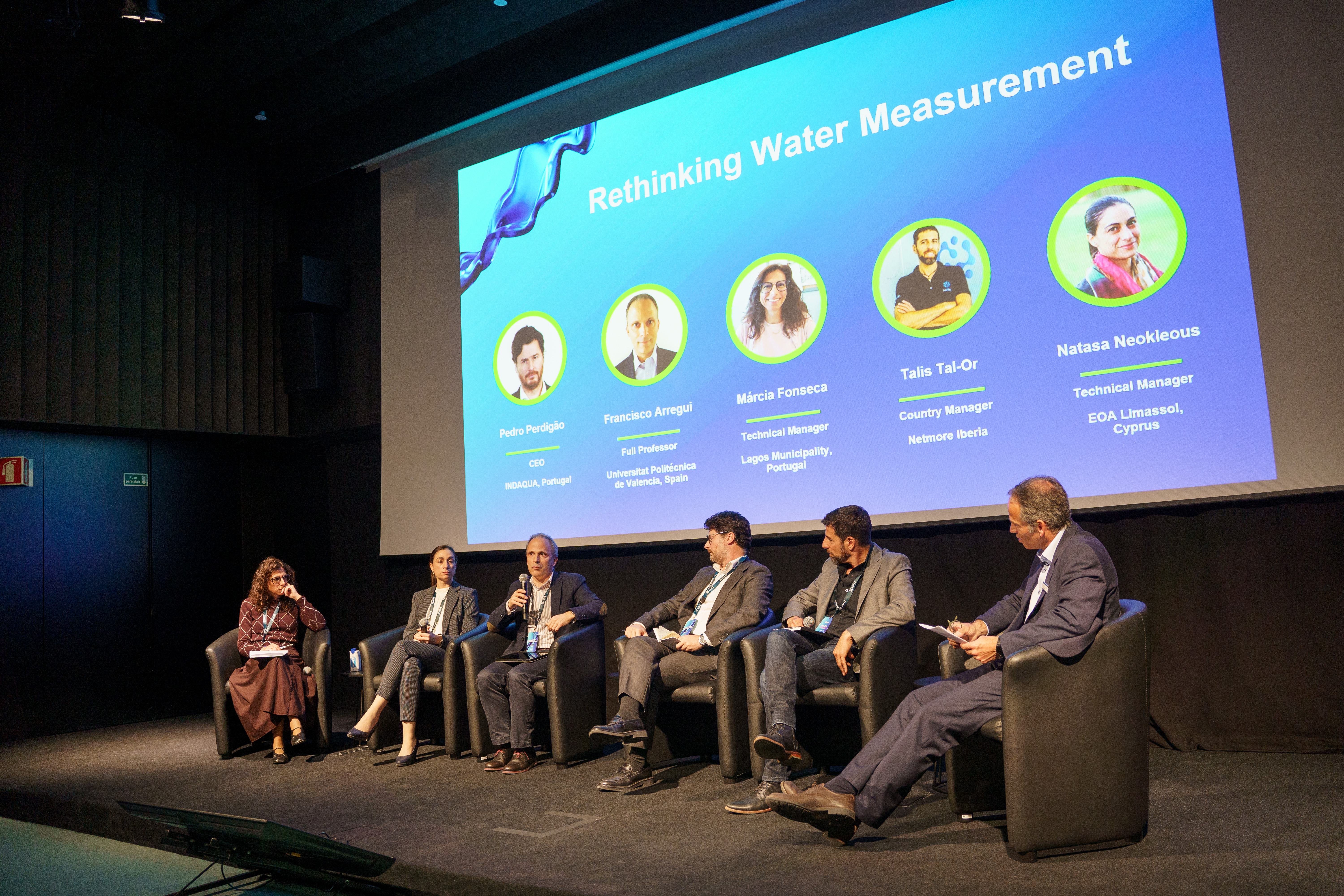
The energy in the room intensified during the experts panel, which featured Eng. Pedro Perdigão CEO of INDAQUA, Dr. Francisco Arregui Full Professor at the Universitat Politécnica de Valencia in Spain, Eng. Márcia Fonseca Director of the Department of Environmental and Urban Sustainability at Lagos City Council, Natasa Neokleous Director of Operations at the Limassol Managing Entity in Cyprus and Talis Tal-Or, Manager of Netmore in Portugal and Spain. There was room to share innovative perspectives on sustainability, digital transformation and future challenges. The exchange of ideas was nothing short of inspiring!
Um dos pontos altos do dia foi apresentação do SmartIO, o novo contador de água ultrassónico inteligente da JANZ que proporciona uma Experiência Melhorada ao Cliente com um Design Sem Partes Móveis ou Cavidades, mantém um desempenho duradouro ao ser imune a sólidos e partículas em suspensão. Permite reduzir o consumo energético do bombeamento da água na rede e aumentar da vida útil da mesma ao exercer menor desgaste graças à mais baixa perda de pressão do mercado. O novo contador leva à Maximização da Receita devido à sua Metrologia de Excelência, com uma precisão de R1000, que supera a da concorrência, garantindo leituras consistentes e confiáveis em todas as condições. O SmartIO regista volumes acima de Q4, logo não para de contar quando excede o caudal máximo, como acontece a outros produtos no mercado. Apresenta também um caudal de arranque de 1L/h, permitindo que sejam lidos consumos mínimos que, de outra forma, passariam despercebidos. É Verdadeiramente Inteligente e preparado para o Futuro. O SmartIO disponibiliza a capacidade de envio de alarmes On Demand às entidades gestoras reportando em tempo real diversos tipos de anomalias (fuga, rebentamento, contador parado, entre outras). É compatível com as redes wM-bus, LoRaWAN e NB-IoT, sem necessidade de intervenção no terreno devido à sua função FOTA (firmware update over the air). Bulit to Last, querendo isto dizer que foi construído para resistir às condições mais adversas.
One of the highlights of the day was the presentation of SmartIO, JANZ’s new intelligent ultrasonic water meter that provides an Enhanced Customer Experience with a Free Pipe Design with No Moving Parts or Cavities, and maintains long-lasting performance by being immune to solids and suspended particles. It allows for reduced energy consumption for pumping water into the network and increases its useful life by exerting less wear and tear thanks to the lowest pressure loss on the market. The new meter leads to Maximized Revenue due to its Metrology Excellence, with accuracy of R1000, which surpasses that of the competition, ensuring consistent and reliable readings in all conditions. SmartIO records volumes above Q4, so it does not stop counting when it exceeds the maximum flow rate, as is the case with other products on the market. It also has a starting flow of 1L/h, allowing minimum consumption levels to be read that would otherwise go unnoticed. It is Truly Smart and Future-Ready. SmartIO provides the ability to send On Demand alarms to administrators, reporting various types of anomalies in real time (leaks, bursts, stopped counters, among others). It is compatible with wM-bus, LoRaWAN and NB-IoT networks, without the need for field intervention due to its FOTA (firmware update over the air) function. Built to Last, it is built to withstand the most adverse conditions.

On the second day, attendees were able to experience first-hand how JANZ water meters are produced, with cutting-edge technology and the highest quality control standards ensuring reliability and performance, with an exclusive behind-the-scenes tour of the state-of-the-art production facilities. The event was packed with insights into the role of water in our world, water management in a data-driven world and exchange of ideas on best practices across regions.

Janz has always focused on developing innovative solutions tailored to its customers, focusing on the quality and longevity of its products. The industry is currently undergoing a digital transition that may involve purchasing smart meters or upgrading traditional meters with a communication module. This transition requires “highly sophisticated” skills, so the company is focused on continuing to develop these skills to help its customers.
SIT, a multinational listed on the Euronext Milan segment which JANZ is part of, is a leader in the residential heating and smart metering sector and creates smart solutions for controlling environmental conditions and measuring consumption.
For SIT & JANZ, this is more than a confirmation, given that the overall score was 78 out of 100, higher than that obtained in 2024. A rating that places it in the 3% of companies in the world that are most committed to sustainability, a group that is further reduced within the sector to which it belongs, where SIT is part of the most sustainable 2%.
The overall score is made up of the ratings obtained in four areas: environment, labor practices and human rights, sustainable purchasing and ethics. Compared to 2024, the most significant increase in score was on the ethics front, where SIT gained seven points (from 60 to 67 points).
In 2024, SIT’s sustainability performance also improved in the CDP (Carbon Disclosure Project) rating, one of the main non-profit organizations for environmental measurement and reporting, which includes 85% of S&P500 companies and 93% of FTSE companies. CDP ratings range from D- to A and SIT – which joined the “Climate Change” program for the third time – obtained a B rating, improving on the previous score of C, while in the “Water” program it debuted with a B-.
“Evaluations and ratings by independent bodies place SIT among the companies that are most committed to translating sustainability into everyday actions,” explains Chiara de’ Stefani, Corporate Sustainability Director of SIT. “In 2022, we launched our first “Made to Matter” sustainability plan and since then we have implemented its vision with consistency: not only have we confirmed our commitment to the ESG front, but we have intensified it, obtaining ever greater recognition. This year, ethics played an important role in defining our EcoVadis score, a result also achieved through the implementation of our policies with which we codify the values that have always determined our actions, because we believe that sustainability is based on the individual actions of each of us.”
JANZ was present at ENLIT Europe, the largest trade fair in the sector on the old continent. On 22, 23 and 24 October 2024, JANZ, together with MeteRSit (part of SIT’s smart metering sector), presented in Milan their latest Smart Metering products.
The trade fair was attended by over 15,000 participants, 700 exhibitors and 500 speakers.


Over a Century of Pioneering Water Management Solutions
At JANZ, our journey since 1915 has been fueled by a commitment to innovation and excellence in water resource management. Our mission is not just to develop products but to offer solutions that preserve and sustain the planet’s most vital resource, water.
Embracing Quality with ISO 9001
Our dedication to quality is not just a principle; it’s our practice. This is evident in our adherence to ISO 9001 standards. Since 1995, the ISO 9001 certification has been a testament to our commitment to quality management systems, ensuring consistency, efficiency, and excellence in all our processes and products.
Elevating Standards with ISO/IEC 17025
Furthering our commitment to excellence, we at JANZ are proud to also hold the ISO 17025 accreditation. This standard specifically relates to the competence of testing and calibration laboratories. For us, ISO/IEC 17025 is not just an achievement; it’s a responsibility. It signifies our capability to produce precise and accurate test and calibration data, a critical aspect in the water management industry.
The Synergy Between ISO 9001 and ISO/IEC 17025
While ISO 9001 focuses on quality management systems as a whole, ensuring consistent quality in all aspects of our operations, ISO/IEC 17025 complements this by concentrating on the competence of our testing and calibration processes. This certification means that our clients can trust not only the quality of our products and services but also the reliability and accuracy of our testing and calibration results. It’s a holistic approach to quality that covers every facet of our operations.
Why ISO/IEC 17025Matters
In the world of water management, accuracy is not a luxury; it’s a necessity. ISO/IEC 17025 accreditation ensures that the equipment and systems we develop are tested and calibrated to the highest standards, and people’s technical competence. This is crucial for our clients, who rely on precise measurements for effective water management and conservation.
JANZ: Your Partner in Trusted Water Management Solutions
As JANZ, we don’t just offer products; we offer the assurance of quality and precision. Our adherence to ISO 9001 and ISO/IEC 17025 standards is a reflection of our unwavering dedication to excellence. We understand the critical role of accurate water management in sustaining our planet, and we are committed to being a trusted partner in this mission. For entities looking for a reliable partner in water management, JANZ stands as a beacon of excellence, backed by the robust framework of ISO 9001 certification and ISO/IEC 17025 accreditation. Our journey of over a hundred years is not just a timeline; it’s a path marked by continuous improvement, innovation, and an unyielding commitment to quality.

JANZ and MeteRSit, which are part of SIT’s smart metering business unit, were present at the Utility Week Live, on May 21st and 22nd, 2024, which took place in the United Kingdom. JANZ presented its line of smart water meters such as the JV400, JV600 concentric meters with MYWATER radio, the eREGISTER sub-range of concentric meters with electronic totalizer, as well as the SmartIO ultrasonic water meter.
This is one of the largest conferences and exhibitions dedicated to the utilities sector (water, gas, electricity and hydrogen). Decarbonization, energy resilience and digitalization were some of the highlights at Utility Week Live, which brought together the major players in the sector in the United Kingdom to find new opportunities and inspire the next generations to participate in this journey. It brought together +3 thousand professionals from the sector, with +200 exhibitors, +150 speakers from different countries.


Ricardo Cordeiro, JANZ’s Marketing and Sales Director, presented the line of smart water meters (MYWATER Add-on, eREGISTER and SmartIO) in issue 103 of Ambiente Magazine.
“At Janz, the focus is on developing innovative solutions adapted to water measurement, focusing on the quality and longevity of the products. The company has a complete range of Water Meters for the residential and commercial sectors, applying different mechanical or electronic measurement technologies, and equipped with communication capabilities, thus being able to meet the needs of the majority of customers in the most diverse geographies.
And as sustainability is a priority, Janz also offers a meter requalification service through the reuse of brass meters, which allows customers to put a recycled product back on the market with the same precision and robustness characteristics as the original product. In this way, Janz contributes to the reduction of CO2 emissions, an objective that is always present in its industrial activity.”
“Janz is confident that, with these new solutions, it will make a definitive contribution to its customers achieving an effective reduction in losses due to under-invoicing, thus maximizing its revenue and significantly increasing the level of service provided to its customers.”

Read the article in full: Janz: Uma história com mais de 100 anos com novos capítulos de mudança – Ambiente Magazine
SmartIO, the new smart water meter for residential applications using ultrasonic technology with “best in class” measurement capability up to R1000, was simultaneously launched at Enlit Europe ’23 and ENEG ’23 organized by APDA. SmartIO is the answer to the global problem of efficient water resource management and is part of a growing sector driven by the replacement of installed meters with smart devices. This smart water meter uses innovative technology, as an ultrasonic meter it has no moving parts, offers a high level of precision (up to R1000), and can be installed in the most adverse conditions, ensuring the lowest maintenance costs. Available with NB-IoT communication or multiprotocol LoRaWAN and wM-bus, it has a battery life of up to 16 years.

JANZ and MeteRSit, part of the SIT Group’s smart metering business unit, were present from November 28th to 30th, 2023, at Enlit Europe, one of the largest conferences and exhibitions dedicated to the energy sector. Energy transition, decarbonization, energy resilience, and digitalization were some of the major highlights at Enlit Europe, which brought together key industry players to find new opportunities and inspire future generations to join this journey. The event gathered over 14,000 participants, with more than 700 exhibitors and over 500 speakers from more than 140 countries.
JANZ’s and MeteRSit teams at ENLIT


JANZ is leading the way to a future where, through the smart use of technology, water utilities, cities and consumers connect to the most important resource on the planet, the one that makes life possible: WATER. Discover our new range of SMART water meters: MyWater Add On, eRegister and SmartIO.
We create reliable, accurate, and eco-friendly solutions for a connected world ensuring:
– an effective reduction of leaks and non-revenue water
– a maximization of revenues
– a significant increase in the service level provided
MyWater Add On separates the equipment from the communication infrastructure that supports it.

This innovative telemetry solution enables water meters to be integrated into modern Smart City projects in a simple and effective way. Tailored to the client, both in rural and urban areas, densely populated or dispersed.
With an LPWA (Low Power Wide Area) network available, the implementation and progress of the projects occurs where, when, and how the customer needs, without the need for additional or dedicated networks. Direct coupling radio sensor available for the entire JANZ range. External radio sensor for any meter or brand.

Characteristics:
– Communication Protocols: Multiprotocol LoRaWAN / wM-Bus and NB-IoT
– Long battery life up to 15 years lifetime*
– Readings register memory: data security up to 1 year of daily information
– Configurable On Demand Alarms: leak, backflow, under and over consumption, blocked meter, magnetic tamper, mechanical tamper, battery status, temperature, occasional and permanent hardware error.
More information: https://cgf.janz.pt/produto/telemetria-mywater-2-0/
*Depending on the communication profile and external environmental conditions.
eREGISTER are the new volumetric smart water meters which gather in the same equipment, a widely tested measurement technology and an electronic register working in a two-way communication with IoT networks.

Available in volumetric water meters with brass body (JV400e) and composite body (JV600e) as well as single-jet water meters with brass body (JM300e) and composite body (JM600e).
Available from DN15 (Q3=2,5) up to DN40 (Q3=16).

Characteristics:
– Metrology excellence – Up to R800
– Multiprotocol LoRaWAN and wM-Bus.
– Long battery life up to 13 years in standard profile*
– Alarms On Demand configurable: leakage, overflow, backflow, blocked meter, reversed meter, battery status, meter lifetime expired, hardware error.
More information: https://cgf.janz.pt/en/product/contador-de-agua-eregister/
*Depending on the communication profile and external environmental conditions.
SmartIO is JANZ’s ultrasonic smart water meter. Anticipates the future of metrology and transforms the way utilities connect with their supply systems.
It is a water meter with an innovative patented technology. With an unique cavityless design, SmartIO takes the ultrasonic measurement to a new level.

Available in DN15 (Q3=2,5) and DN40 (Q3=16).
 Characteristics:
– Metrological Excellence – Up to R1000
– Communication Protocols: multi-protocol LoRaWAN / wM-Bus and NB-IoT
– Configurable On Demand Alarms: leak, burst, backflow, empty pipe, battery status, tamper, temperature, air in pipe, blocked meter.
– Withstands harsh conditions
– Temperature monitoring: Anticipates the probability of freezing and possible sanitary risks.
More information: https://cgf.janz.pt/en/product/water-meter-smartio/
Rita Ribeiro – Assistant Researcher at LNEC
Associated with population growth, climate change and the progressive of society the pressure on water resources has increased. Along with behavioral changes in water use and the use of more efficient devices, the use of alternative sources can reduce the pressure on water abstraction in the natural environment for the production of drinking water. Rainwater harvesting and the use of treated grey water for non-potable uses (e.g., watering green spaces and flushing toilets) are measures with high potential for reducing potable water consumption in urban areas. However, their application is not widespread in Portugal for various reasons. Standardization plays an important role in eliminating technical barriers and may be relevant in this case.
The European normative activity in the scope of wastewater engineering is developed by the Technical Committee CEN/TC 165 – Waste Water Engineering of the Comité Europeu de Normalização (CEN). The national monitoring of the normative activity of CEN/TC 165 is ensured by Technical Committee CT 90 – Water Urban System. European standards for the onsite use of treated wastewater are developed by WG 50 – Use of treated wastewater.
To date, two standards from a set of standards with the generic name “Onsite non-potable water systems” have been published: EN 16941-1 ” Sistemas de água não potável no local – Parte 1: Sistemas de aproveitamento de águas pluviais em edifícios “, published in 2018, and EN 16941-2 ” Sistemas de água não potável no local – Parte 2: Sistemas para a utilização de águas cinzentas tratadas “, published in 2021. Follows a presentation of these two standards, with reference to how their use could support the implementation of these water systems in Portugal.
The standards EN 16941-1:2018 and EN 16941-2:2021 aim to establish requirements for rainwater harvesting systems and treated grey water utilization systems, respectively. These standards provide recommendations for the design, sizing, installation, identification, commissioning, and maintenance of these systems. In EN 16941-2:2021, aspects related to water quality monitoring are also included, something that is not the case in EN 16941-1:2018. However, both standards refer to the f t-for-purpose approach, thus establishing that water treatment should aim to obtain characteristics suitable for the selected use(s).
The scope of EN 16941-1:2018 and EN 16941-2:2021 is restricted to non-potable uses, namely: landscape irrigation, toilet flushing, laundry, cleaning purposes (e.g. floor and vehicle washing). Both standards clearly identify the uses that are out of scope, namely: use for human consumption and food preparation; use for personal hygiene purposes; use for decentralized flow attenuation and rainwater infiltration (in the case of EN 16941-1:2018); direct use without treatment and consumption in heat recovery and cooling (in the case of EN 16941-2:2021).
Building systems defined by EN 16941-1:2018 and EN 16941-2:2021 consist of four main functional elements: collection, treatment, storage and distribution. According to these standards, it is important to consider the occurrence of excessive availability of water of local origin (rainwater and grey water) and, conversely, its scarcity. Thus, reference is made to the need to include properly sized overflow areas, to be activated when the maximum capacity of the system is reached. On the other hand, whenever the permanent availability of water at the points of use is required, these systems should include a complementary supply, usually with drinking water. This last aspect, the supply with backup water, is developed in the normative text with particular care, and minimum requirements are established for rainwater harvesting systems and treated grey water utilization systems in order to avoid contamination of the drinking water supply.
In both standards it is established the need to perform a risk assessment associated with the use of rainwater and treated grey water, considering the potential impacts on people, environment, infrastructure and equipment. This risk assessment should cover the design, installation, testing and commissioning, operation and maintenance phases of the non-drinking water system.
The clear identification of all components of rainwater harvesting systems and treated grey water utilization systems, including accessories and points of use of water, is another aspect that deserves special development in these standards. It is important to emphasize, for its relevance to the safety in the use of water, the requirement to place a sign warning of the existence of a non-potable water system near the supply valve of the building system of drinking water.
Despite the existing consensus on the recognition of the value associated with rainwater and treated grey water systems, several barriers have limited their widespread application in buildings.
Technical standardization can play an important role in removing existing technical barriers by standardizing procedures and criteria. The EN 16941-1:2018 and EN 16941-2:2021 standards are public domain documents that compile knowledge and methodologies validated at European level and establish guidelines for the design, sizing, installation, identification, commissioning and maintenance of rainwater harvesting systems and treated grey water utilization systems, respectively. Although their use is voluntary, it is believed that these normative documents can contribute to a greater use of rainwater harvesting systems and treated grey water utilization systems in Portugal, since they facilitate communication between the different agents involved and reflect the European experience in this field.
If we look at the map of average annual rainfall in Europe, we see that Portugal is not in a bad situation, with variations throughout the country between 750 and 2000 mm, a situation that is further benefited by the fact that most Iberian rivers flow into our territory. But if we analyze the relationship between water demand and availability, we see that the situation is not so good.
Portugal has effectively a serious problem of water scarcity, which, according to recent studies, can be classified as high in the basins of the rivers Vouga, Liz, Cávado and Tejo, as severe in the rivers Sado, Guadiana, Ribeiras do Algarve and Oeste, and as extreme in the basin of the river Mira. This situation of water scarcity is naturally aggravated in years of drought, when demand is maintained, but supply is obviously more limited.
It is therefore important to ensure not only better management of water demand, through more rational and efficient use, but also better management of water supply, using alternative sources, such as treated wastewater.
In Portugal we currently collect about 640 million cubic meters of wastewater per year from the sewer pipes. The good news is that about 99% of this water is treated, thanks to the high investments made over the last two and a half decades. The bad news is that only 1.3% of these waters are reused. We are therefore wasting a significant amount of water and nutrients into rivers and into the ocean.
The reuse of wastewater can therefore assume a more important role in the management of our water resources, for internal uses of the management entity that produces it or for third-party uses, such as the agricultural and industrial sectors.
These uses may imply the need to reinforce the treatment that we do today and certainly requires its transportation to the places of consumption. This can be done directly with networks that allow the distribution of treated water, or indirectly with its discharge into an intermediate water medium, for example reservoirs, from where it is then removed for agricultural, industrial, or other uses.
To promote the reuse of wastewater in Portugal it would be important to re-evaluate the fiscal policy to introduce more incentive to this source of water, for example by making the water resources fee more impactful. Those who reuse would be excused from paying not only the rejection fee, but also the water abstraction fee, with a significant impact on their costs.
It would also be very important to change the current legislation on wastewater use, regarding indirect use through water, which is not covered in the current regulatory provisions. It would be useful to promote the development of technical documentation on the use of alternative water sources, their advantages, disadvantages, and best practices. It would also be important to develop awareness-raising for decision-makers about the use of alternative water sources, including reuse. From the perspective of scientific development, it is important to promote innovation on the use of alternative water sources and disseminate reference cases that motivate their multiplication.
One of the measures foreseen in the new Strategic Plan for Water Supply and Wastewater and Rainwater Management (PENSAARP 2030) is the use of alternative water sources, which includes the reuse of water.
Jaime Melo Baptista
Presidente da LIS-Water, Lisbon International Centre for Water

In the heart of a forest park, a few minutes from the center of Lisbon, Cascais and Sintra, there is a place full of greenhouses where Man gives water the treatment it deserves – The Belas Clube de Campo. In these greenhouses each drop represents a treasure too precious to be used only once. It was, therefore, the first entity distinguished by ADENE with the AQUA +, the water efficiency system for buildings. In fact, the aura of sustainability envelopes the entire development, whose townhouses were considered the most sustainable houses in Portugal and the first to achieve Nearly Zero Energy Building (NZEB) certification values.
When we walk through Belas Clube de Campo time is suspended and we walk slower so that we can linger in such a beautiful and magnificent space! And it doesn’t matter which path you choose, because at Belas Clube de Campo all paths lead to greenhouses and sustainability. The composition of the building is perfectly integrated into the surrounding landscape. A walk-through Belas Clube de Campo allows a sensory experience only possible through a genuine contact with nature: we breathe slowly, feel the scents of nature, the mind calms down with the soft rhythm of the birds’ melody, and we feel invaded by a wonderful tranquility. And yet, the surrounding houses seem to hide from our gaze a secret world of modernity and comfort. In fact, Belas Clube de Campo is an icon of what we would like to find towards a more sustainable world, with pillars based on innovative infrastructures and solutions, but without compromising future generations.
In this place full of greenhouses, the natural ecosystems are preserved and are the target of a permanent care, being the placement of nests, planting of trees and the preservation of vegetation some of the activities developed for the preservation of species. Belas Cube de Campo is at the forefront of sustainable construction, permanently investing in energy efficiency and waste management. And that’s not all. For the entities that work with water, it is easy to feel a great enthusiasm with the way Belas Clube de Campo takes care of its water, in favor of a water efficiency still uncommon in the age we live in.
The four beautiful lakes on the spot receive rainwater, which is channeled there. Two of these lakes are responsible for the irrigation of the golf course, supported by 6 additional boreholes. The storage of water in the lakes and the abstraction of water from the boreholes are carefully managed, with regular monitoring of the water quality, which is also supported by several studies for irrigation optimization.
The use of rainwater is a measure with enormous potential to reduce the use of drinking water in uses where its quality may be lower. Therefore, Belas Clube de Campo has extended rainwater use to the surrounding greenhouses. Rainwater is collected on the roof, level 1, level 0, and level -1, and directed through a system to a water storage tank, with a capacity of between 5m3 and 15m3, installed in the garden. When the accumulated water reaches its limit, it is routed to the public collector. With the help of a booster pump and an adaptation in the network, it is possible to use the stored water for watering the green spaces and for washing.
The houses have a separate domestic wastewater system: grey waters from showers, bathtubs, and sinks, and blackwaters from kitchens, laundry rooms, toilets, and bidets. The houses are prepared to incorporate a compact wastewater treatment of grey waters, which are later sent to an independent supply system for the flushing of toilets. With a hot water recirculation system, Belas Clube de Campo greenhouses makes possible to avoid the wasting water from the moment you open the tap until you get the water with the desired temperature. In addition to reducing water consumption, the system also allows for a reduction in the energy needs required for heating the water with a significant improvement in thermal comfort conditions.
Water is scarce. Water is precious. Without water there is no life. These are words we hear and repeat whenever the value of water is at issue. As William Shakespeare once said ” May your words illustrate your behavior, and your behavior your words.”. From 1999 until now, Belas Clube de Campo has received many awards and certifications that proves that here, sustainability is not mere words. These distinctions are the result of daily research and innovation, with the goal of presenting the market with residential solutions of excellence that respect the environment and families can live with all the quality and comfort.
Armando Silva Afonso | Carla Pimentel Rodrigues
Associação Nacional para a Qualidade nas Instalações Prediais
(ANQIP), Polo Operacional da Universidade de Aveiro
Due to not only demographic growth but, fundamentally, to economic development and lifestyle, drinking water is now a scarce resource that, from being a community and heritage asset, has become an economic good over the past decades. Climate change has aggravated this scenario and it is expected that in some countries, such as Portugal, the predictable reduction of precipitation or the change in its regime may, in the short/medium term, create situations of water stress.
As a scarce good, essential to life, its efficient use should be a priority at all levels. The need for the efficient use of water was already recognized as a national priority in 2001, through the publication of PNUEA – Programa Nacional para o Uso Eficiente da Água. Among the actions proposed in this program, several measures applicable in the building water cycle (indoor and outdoor uses) can be mentioned in the scope of rainwater use and grey water reuse. Unfortunately, this program was never implemented, although it was updated in 2012.
The use of rainwater or grey water in buildings can avoid the supply of drinking water for some specific uses, allowing, in addition to the reduction of water abstracted (and the pressure on water bodies), a reduction in energy consumption and GHG emissions. With specific reference to rainwater harvesting (collection) in buildings, it can also contribute to the reduction of flood peaks in urban areas, which is why it has seen a growing interest in many countries, even without water scarcity or water stress.
In Berlin, for example, rainwater harvesting (collection) systems have been successfully introduced on an urban scale in the rehabilitation of large spaces such as Potsdamer Platz, where rainwater collected from the roofs of 19 buildings (32,000 m2) is stored in a 3,500 m3 tank.
In Tokyo, more than 750 public and private buildings have introduced rainwater collection and utilization systems. In Brazil, the Brazilian technical standard ABNT NBR 15527 was published in 2007, and rainwater harvesting (collection) is mandatory, for example, in S. Paulo. In Spain, some local authorities require new buildings to have greywater reuse systems as part of a strategy to deal with water scarcity.
However, the reuse of rainwater and grey water in buildings carries environmental and health risks that should require appropriate controls. This recommendation is included in the “Blueprint Water” of the European Commission. It is therefore considered that the development and dissemination of technical specifications for the use of rainwater and grey water reuse is essential to encourage the voluntary use of these systems, but the need to reduce health risks also requires mandatory certification of these systems.
In Portugal, ANQIP (Associação Nacional para a Qualidade nas Instalações Prediais), a sector association for water and sewage building installations, whose members include companies, universities and managing entities has developed a broad technical and scientific base in the field of rainwater harvesting (collection) and grey water reuse in buildings, which includes the preparation and publication of technical specifications and the creation of voluntary certification systems for installations. In this last aspect, ANQIP was even the first European entity to respond to the demands of the “Blueprint Water”.
In 2007, ANQIP established a Technical Committee (CTA 0701), which produced, based on the Brazilian and German experiences, among others, and on their adaptation to the national reality, two Technical Specifications: ETA 0701, aimed at the design, sizing, installation and maintenance of rainwater treatment systems, and ETA 0702, aimed at the technical and sanitary certification of these systems. Note that ETA 0702 (for the certification of facilities) was preceded by extensive field work, with monitoring of pilot facilities over several months and in terms of numerous parameters, including legionella.
Recently, in 2018, a European Standard (EN 16941-1) for these rainwater harvesting (collection) systems in buildings was finally published, which was very much based on German standards, but did not take into account the necessary adaptation of these systems to different climatic realities, as is the case of southern countries.
This is one of the reasons that justify the planned revision, soon, of this standard, in a process that will include the participation of ANQIP. Note that the European Standard also did not contemplate, in its initial version, the issues of certification of facilities. For this reason, The ANQIP ETA 0701 and 0702 continue to be the reference used in Portugal for these systems.
Regarding building systems for grey water reuse in buildings, ANQIP followed a similar procedure, having published, already in 2009, the Technical Specification 0905, for design, sizing, installation, control and maintenance of these systems, and the ETA 0906, for the technical and sanitary certification of the installations. Meanwhile, in 2021, a European Standard for these systems was also published (EN 16941-2), which added nothing, however, to what was already established 12 years earlier in Portugal, through ANQIP and ETA, keeping these technical specifications, more complete, demanding, and exhaustive than the European Standard, as a reference among us.
It should be noted that ETA 0905 and 0906, like EN 16941-2, are aimed at the so-called collective or long retention time installations. In addition to these systems, there are also
small individual facilities for grey water reuse on the market, such as washbasins coupled to toilets, where the water used in the washbasin is then used to flush the toilet. These compact appliances, to which ETA 0905 and 0906 do not apply, are subject to individual certification by ANQIP, in the category “efficient products” (catalog available at www.anqip.pt). In addition to these products, small compact grey water regeneration plants have recently appeared on the market, which are an intermediate solution between individual plants and large collective plants and have also been subject to technical and sanitary certification by ANQIP, for the safety of users.
In 2021, as part of the Requalification Water Meter Service, JANZ reused 32 thousand water meter bodies, equivalent to approximately 32 tons of brass. With this reuse, JANZ was able to avoid the emission of about 12 thousand kilos of CO21 into the atmosphere, the equivalent of 19 round-trip flights between Lisbon-Rome.
The reuse of brass has numerous environmental benefits beginning with the reduction of degraded areas due to extraction of its ores, namely copper and zinc. Brass is characterized by its ability to be indefinitely recycled and, because it is more profitable than manufacturing it from raw materials, it is also one of the most recyclable metals in the world.
The property of brass allows it to be infinitely recycled without degrading its metal structure, also making the process of reusing the water meter body an economically and ecologically advantageous solution.
Whenever JANZ reuses a brass body to requalify a water meter, it contributes to energy savings that are reflected in the casting process of this metal, corresponding to 293 kWh of electricity for each ton of melted metal. This energy saving results in a reduction of CO2 emissions, the quantities of which depends on the energy mix of the country where the smelting takes place.
The practice of reusing brass bodies and, consequently, the requalification of water meters, has a long history in the Portuguese market and it is today, more than ever, being requested by the management entities, motivated, and committed, themselves, to contribute to this significant energy, ecology, and economic savings when managing their water meter parks.
Requalify water meters reusing the original brass bodies means technologically and metrologically updating the meter and simultaneously contribute to an active carbon footprint reduction.
In addition to the reuse of brass, JANZ seeks to extend the concept of sustainability to all its activities, adopting good practices intended to protect the environment and leave a promising future for the next generations. Within the scope of our sustainability policies, reusing and recycling are a permanent concern in the company.
In the first quarter of 2022, 40 kilograms of tungsten carbide waste, coming from carbide cutting tools used in spinners and the machining of meter bodies, was sent for recycling. Tungsten carbide is considered a very valuable metal in industry due to its low abundance in nature and demanding mining, which needs a large amount of ore to extract a small amount of tungsten.
JANZ is engaged in a permanent search for new ways to reuse and recycle all possible waste materials, from the simplest, such as cardboard boxes, to the most complex such as brass and tungsten. We believe this is the path to a more efficient and competitive, innovative, and sustainable economy.
Predicting a tendency to worsen the reduction in precipitation due to the expected effect of climate change, with likely significant impacts on the temporal and spatial distribution of water resources, on water quality and on the more frequent occurrence of significant droughts, the elaboration of the bases of the Plano Regional de Eficiência Hídrica do Algarve (PREHA) by the 14th of January Order No. 443/2020, was determined with the following objectives:
PREHA comprises the implementation of 57 measures, complementary and articulated to ensure the necessary resilience to the effects of climate change: around 40% of projects aim to increase water efficiency, 34% improve adaptation processes to drought, 15% contribute for environmental goals and 11% to improve articulation (including dissemination of good practices).
Still at a critical stage of the pandemic crisis, and under the Collaboration Protocols signed between the APA (Agência Portuguesa do Ambiente) and the 16 Municipalities of the Algarve, 46 Water Efficiency projects financed by the PEES (Programa de Estabilização Económica e Social) were approved with a total investment of €2,928,083 and expected to be completed by December 2021. The investment made is structured into two types of measures: monitoring/active control of losses and improvement of infrastructure and irrigation management technologies in green spaces.
During this year, the Agência Portuguesa do Ambiente I.P. – Administração da Região Hidrográfica do Algarve (APA – ARH do Algarve), in partnership with ADENE – Agência para a Energia, AMAL – Comunidade Intermunicipal do Algarve, the company Águas do Algarve, the University of Algarve and DGESTE – DSR Algarve , promoted the 1st Training Workshop aimed at school communities interested in joining the social school network “EFICIÊNCIA HÍDRICA NA ESCOLA”, with the main recipients of this action being school community managers/teachers and technicians from local authorities/managing entities. It is intended that this network of schools can function in the region as a “laboratory of good practices” at the infrastructural and behavioural levels (e.g., networks, devices, equipment) which allows leveraging other dynamics and attitudes.
In 2021, the 1st edition of the “EFICIÊNCIA HÍDRICA NA ESCOLA” competition was held, with projects submitted by 33 schools in the Algarve from 9 municipalities, namely Alcoutim, Faro, Lagos, Loulé, Olhão, São Brás de Alportel, Silves , Tavira and Vila Real de Santo António and eight prizes and eight honourable mentions were awarded in the global amount of €97,000 financed by PEES and also awarded the prize AQUAMONITOR – GALARDÃO ADENE with the integration of the awarded School and respective municipality/managing entity in the Barómetro ECO.AP 2.0, in pilot phase during the year 2021.
The PRR (Plano de Recuperação e Resiliência), one of the fundamental instruments for the social, economic and environmental development of the country in the next decade also included an investment of 200 M€ for the implementation of PREHA framed in the structuring dimension “Resilience” in component 9: Water Management. This PRR investment consists of 6 sub-measures: Reduce water losses in the urban sector; Reduce water losses and increase efficiency in the agricultural sector; Strengthen resource governance; Promote the use of Treated Wastewater; Increase available capacity and resilience of booming reservoirs/adduction systems; Promote seawater desalination.
Finally, it should be noted that the implementation of the PRR is ongoing, having been launched a notice with an allocation of 14 million euros out of a total of 35 million foreseen for the sub-measure “Reducing water losses in the urban sector”, which aims the implementation of measurement and control zones and controlled pressure zones, as well as the rehabilitation of water distribution infrastructures with higher rates of real losses. The region’s water management entities responded positively to the challenge posed surpassing the notice’s allocation so that during 2022 we will have the implementation of these projects in the territory crucial to achieve the 2hm3 reduction target in 2025.in the territory crucial to achieve the 2hm3 reduction target in 2025.
However, Green infrastructures are gradually replaced by gray surfaces (such as dikes and dams). On an increasingly urbanized planet, Man seems to forget that nature is his greatest ally. At least until now….
Despite nature being allied with Man since the beginning of its existence the concept of green or natural infrastructure is relatively recent. The European Commission describes it as any instrument that makes possible to obtain ecological, economic and social benefits through solutions based on nature which allow people to live better. Green infrastructures provide attractive solutions to environmental, social and economic problems and make it possible to alleviate the impact of natural disasters related to climate change.
Green and gray infrastructure (such as dikes and dams) are the yin and yang of a successful strategy in the course of sustainability. As opposing concepts, they can and should be synchronized in 21st century reality. In an era in which climate change and water scarcity are global concerns green infrastructures present themselves as sustainable and multifunctional solutions as opposed to gray structures which usually have a single function.
A natural infrastructure strategy allows for several economic benefits and greater climate resilience, greater carbon absorption, better air and water quality, better energy efficiency and numerous social benefits such as recreation and inclusion for the communities involved.
The icing on the cake is that it’s much nicer to look at a forest than a gray wall and sometimes they have exactly the same function as filtering sediment or water, assures Filipe Feltran-Barbieri, Senior economist who leads econometric analyzes in Agricultural Economics and Environment in restoration projects, Natural Infrastructure and New Climate Economy.
When natural areas are reduced to make room for urban expansion giving way to agricultural or degraded land the water supply is compromised in its quantity and quality. Climate change tends to aggravate this reality. Increases in torrential rains alternated by prolonged droughts lead to a greater need for sediment management due to severe erosion and a greater need for storage during the rainy season for use in the dry season.
Conventional water management strategies (such as the construction of dams and reservoirs) have prevailed at the expense of green infrastructure, forests or wetlands which when managed to protect the downstream water supply ensure the availability of water in cities through green infrastructures are also a response to the challenges that climate change poses to water management entities with regard to the availability and quality of this vital resource. The restoration of forests brings numerous additional benefits such as filtering sediment and reducing erosion (which results in less turbid water) with economic benefits in water treatment and management due to the lower need for the use of chemical products, energy and of manpower.
Restoring forests makes possible to rehabilitate ecosystems and deliver better quality water to build infrastructure, regulate water flow and reduce the risk of flooding. The incorporation of a green strategy makes possible to maximize the efficiency, performance and resilience of conventional structures, allowing water to reach treatment plants with better quality.
The challenges of the 21st century do not allow for the adoption of a single-color paradigm because we remain captive to the capital already invested which is why the green paradigm in an urban environment is still not felt. As explained by David Marlow in an edition of Water magazine 2013 Research. We know that it is not possible overnight to disable an entire system and replace it with another. But natural infrastructures make it possible to alleviate complex engineering solutions to ensure the availability and quality of water playing different roles in the sustainability of ecosystems and being fundamental components of water security strategies.
WRI Brasil has presented numerous reports offering detailed results of the Investment Analysis in Natural Infrastructures applied to different regions of Brazil, which strengthen and financially justify the investments of the water sector in natural infrastructures. In this context, the Guandu System in Rio de Janeiro which integrates the largest Water Treatment Plant in the world was the subject of a series of analyzes that can help in sanitation and water resources management strategies. The report resulting from this analysis proves that forest restoration can complement and safeguard the Guandu System, the main source of water supply for the Metropolitan Region of Rio de Janeiro.
It is sad to think that nature speaks and that the human race does not hear, wrote the French author Victor Hugo, in the 19th century. How many times have we opted for gray structures when the answer was in nature, right in front of our eyes? Just look at the new concepts and management of urban spaces. Nature is taking a back seat in the minds of man. And even so, things are not going well for humanity. About 600 million people remain without access to safe drinking water. Droughts affect more than 35 million and by 2050, 300 million people could be flooded once a year. Where is Humanity going wrong anyway? If it’s true that our ability to survive depends on our ability to value nature, then our future doesn’t bode well.

The last Intergovernmental Panel on Climate Change report (IPCC) released in August raised the red flag to Humanity by claiming that the planet is warming up at an unprecedented level and faster than previously thought. Concluding that to avoid the worst effects of climate change the world needs to change with no “documented historical precedent”. And sustainable cities are a fundamental premise for living in a more conscious present and a more global future.
However, the occurrence of extreme phenomena is already an increasingly frequent reality. Episodes of storms, heat waves, forest fires, droughts and floods are occurring all over the planet… At a time when more than 50% of the world’s population lives in urban areas, cities must be made more sustainable and resilient. This means that buildings must be better prepared to face these phenomena, but how to act?
The sustainable transition, in terms of resource conservation, decarbonization and climate resilience, makes imperative the concept of sustainable cities with the development of solutions for a better and more efficient use of water, in situations of scarcity and in flood situations. The great challenge of improving the water efficiency of buildings requires initiatives that respond to the need to adapt to climate change, including solutions to reduce waste, optimize the use of water and its reuse in buildings.
There are several measures we can take to increase the resilience of buildings: choosing more efficient taps, toilets, showers, washing machines and dishwashers, but also using rainwater and reusing greywater; select native plants and irrigation systems suitable for gardens and install green roofs on buildings. There are systems available on the market that make possible to reduce the need for drinking water in homes by reducing the needs for abstraction and consumption and also contributing to better management of floods and droughts, such as:
> Rainwater harvesting systems;
> Building systems for the reuse and recycling of greywater which is water collected from showers, taps and washing machines and dishwashers, after use.
The water collected stored and treated by these systems can be used for non-potable purposes such as flushing toilets, washing clothes and watering gardens, contributing to the reduction in the use of water resources.
The use of rainwater also has the merit of contributing to greater control of flood peaks in cities, while allowing it use, when necessary, without resorting to drinking water. On the other hand, gray water is always available as a more sustainable alternative for uses that do not require the quality of water for human consumption. On the other hand the installation of a green roof or facade which consists of a layer of vegetation installed on the roof or facade of a building allows it to absorb rainwater also helping to reduce flooding problems, the flow rate of the rainwater (many times responsible for infrastructure damage) and the overload of public drainage systems.
Another of the great advantages of green roofs and facades is the attenuation of the “heat island” effect in cities, as they contribute to the increase of the green area in the city and the consequent reduction in temperature.
In addition to this thermal effect in cities green roofs and facades also have effects on the thermal comfort of buildings as they act as thermal insulation reducing the maximum temperature (in summer) and increasing the minimum temperature (in winter) in the building which allows reducing the need of cooling/heating systems increasing comfort with less energy consumption in the building. These are some of the solutions that contributes to increase resilience on cities and that are valued by the water efficiency assessment and classification system for buildings aquamais.pt by ADENE – Agência para a Energia.
It is a simple, agile and voluntary system that classifies the efficient use of water in buildings, guiding the market (in construction and consumption) towards more efficient choices and solutions. In the residential sector in addition to the Water Class, AQUA+ provides information to the consumer/property developer regarding the performance of the property with regard to infrastructure, equipment and devices (installed or under project) namely: water sources and networks, outdoor uses, efficiency of devices (taps, cisterns and showers), washing equipment (dishwashers and clothes) and domestic hot water. Improvement measures to be implemented to reduce water consumption and associated energy consumption are also identified indicating the potential for saving water and water + energy (water-energy nexus).
On December 15th at the ADENE Event: 20 Years in the 21 century the new AQUA+ Hotels was launched with a view to supporting the tourism sector in water management also contributing to increasing the resilience of tourist resorts and local accommodation, and, therefore, for building the sustainable cities that we so desperately need.
Learn more at: aquamais.pt
In the beginning the mother nature controlled all natural phenomena and the ritual of rain dance ritual was a way the Man found to apply his fury and get his good will.
Man learned to master fire, invented the wheel, sowed the land, domesticated animals and built great empires. Throughout the process he understood that nature can respond ruthlessly and relentlessly repaying with scarcity and destroying its crops with drought, pests and storms. To find harmony, abundance and sustainability Man needed to appease the spirits of nature offering the Gods rituals, rain dances and constructing splendid temples which last until today.
Time passed and we reached the 19th century. In the modern era the rain dance no longer makes sense. The Industrial Revolution left behind the agricultural and hand-made production methods, using machines to aid human actions and resorting to more raw materials. Sustainability is no longer in the hands of the Gods. A new Man-Nature relationship emerged, in which Man dominates and explores natural environments. Since then, environmental degradation has been increasing. Air pollution, water and soil contamination or global warming, have become global concerns.
The use of the concept of sustainability as “the need to meet the needs of the present generation without affecting the possibility of future generations to meet theirs” was first used in 1987 in the Brundtland Report, entitled “Our Common Future”.
Sustainability is today, more than ever, in the hands of Humanity. We all know that it is not with the rain dance that solutions will drip. Sustainability is not in the hands of the gods. Therefore, it must be a commitment by all of us to guarantee the future of the planet as we know it today.
Sustainability starts with each of us. As management entities, companies, politicians, consumers, teachers, parents concerned with protecting the future of our children, if each of us does our part is enough.
But what is sustainability anyway? And how can we all contribute to sustainability?
Being sustainable is simple. It’s just not using more than necessary. It’s to be aware that every drop wasted is a drop less left for someone else (or for the future).
We share the world with 7 billion people, resources and water are not infinite. The attitudes of one of us are a mere drop. But the attitudes of 7 billion make up the vastness of the ocean and the sustainability of the world.
João Paulo Almeida started in 2002 to develop projects targeted at the water market. After assuming responsibility for the Information Systems Department at Águas do Porto, he became clearly aware that the profitability and success of a company in this sector depends on accurate decisions supported by global analyses based on a huge set of data. Once the need is detected, João Paulo Almeida started to work on the creation of telemetry systems, tools that allow crossing the most relevant parameters with aggregated data in order to treat the information in a logical and systematized way. Thus, the first lines of the GoReady story begins to be written. An innovative telemetry system with an interface of solutions that allows you to make quick decisionssupported by systematic and rigorous knowledge.
GoReady was formed in 2015 by IT professionals with a strong knowledge on the Water sector. At that time, we identified a big gap in the market. The lack of solutions adapted to the reality of managing entities that depend on accurate decisions and actions, supported by global analysis from a huge set of data. This led us to create the telemetry system MyWater, a solution designed from scratch to respond to this reality.
There are numerous advantages for managing entities in implementing a telemetry project. MyWAter is a platform that was designed from scratch to manage telemetry information automating the reception of thousands of data transforming and calculating various indicators. All this information is presented in a simple and intuitive interface allowing the managing entities to draw the important conclusions for the daily tasks of their company.
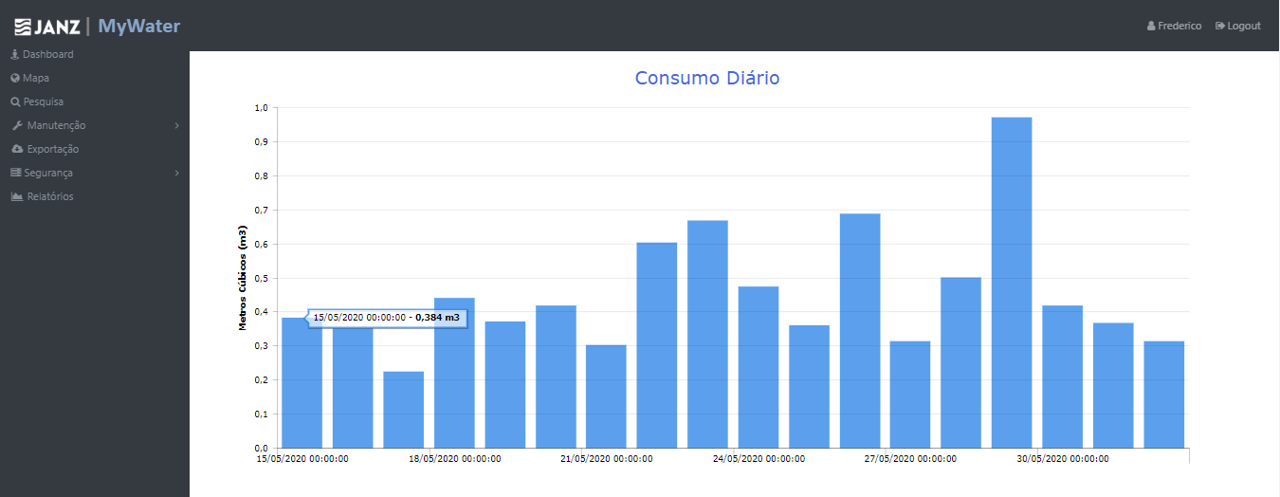
GoReady has extensive experience in the water sector which allowed us to develop this application targeting the specific needs of the sector. However, we develop and adapt the application to the particular needs of each customer in order to maximize its use. The solutions currently available on the market are the ones from the major worldwide manufacturers which means that they are not prepared for customization and usually have long development cycles that are often out of step with market needs.
The partnership with Janz is strategic for GoReady. Janz is a company that has been operating in the sector for many years with high quality products and a very strong notoriety making our offer complementary to the products already sold. We consider that it is differentiating to present ourselves in the market with an integrated solution in order to facilitate equipment and software integrations thus making projects simpler for customers.
The process of collecting readings for invoicing is critical for managing entities however the telemetry system implementation provides a set of advantages for the utilities that allows considerable gains in efficiency. The SW MyWater allows you to rigorously manage the entire telemetry park and obtain readings every hour or every 15 minutes allowing you to make complete water balances in DMA (district metered areas). Additionally, it provides a set of alarms generated by the water meters.
All this information is aggregated and represented in a very simple way allowing the utilities to identify leaks, fraud or anomalous consumption events with an impact on the network. SW MYWATER promises to be a powerful ally for the utilities to efficiently manage their supply systems.
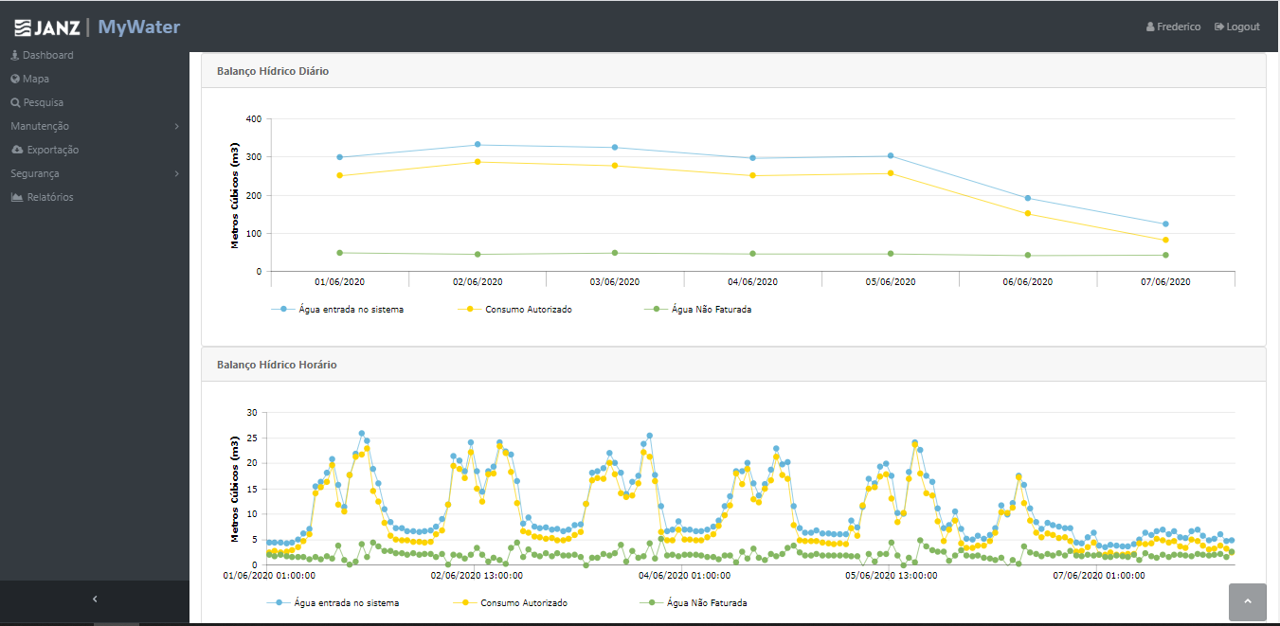
GoReady develops and implements a set of solutions that are integrated with MyWater as well as with other platforms on the market such as GIS (geographic information system), maintenance management system, among others. The use of these platforms in an integrated manner allows entities to efficiently manage the entire water distribution network.
Through the automatic processing and crossing of all relevant data the software is able to identify areas with a poor operating performance enhancing the identification of leaks, bursts or frauds.

MyWater is a very simple to use software with a very short learning curve. Entities do not need additional human resources to manage the platform. With the automation of all data processing and the sending of alerts and reports it is possible to minimize human intervention throughout the process freeing them for actions with added value.
With most of the supply networks completed most managing entities are currently preparing or implementing projects to obtain efficiency gains. whether through the sectorization of the network, the implementation of pressure management systems, the atomization of some tasks using remote management systems or even the implementation of telemetry systems. We have observed that even small entities through association with neighboring municipalities gained the necessary scale to carry out a more efficient management.
The regulatory authority has also played a very important role in leading entities to seek these efficiency gains. I believe that currently most entities are prepared and receptive to implementing telemetry systems. With IT solutions like MyWater it is easier to take advantage of these systems.

The cost of equipment and technology still remains the biggest obstacle to the massive implementation of these systems.
I believe that in the near future all consumers will have access to the same information from the managing entities, that is, hourly consumption and alarms triggered by equipment or via software. There are already some projects of this nature in the sector and soon all entities will have these tools available free of charge, both for domestic and non-domestic consumers.
There are numerous reasons however I could highlight these three:
/ Simplicity of use
the platform is very simple and intuitive and can be used by different stakeholders within the managing entities without great technical knowledge;
/ Experience acquired
The platform benefits from an experience of 6 years and a group of users who enhance its daily improvement;
/ Integration with the manufacturer
The Platform was developed and is continuously maintained with the manufacturer of the meters freeing the managing entities from all the tasks inherent to the integration of the two components which is not always easy.
The MyWater Software is used to its fullest potential in entities that have sectors of the network with 100% telemetry counters thus allowing for an hourly water balance. An hourly water balance allows the management of the network in a much more efficient way enhancing the identification of leaks, bursts, anomalous events, frauds.
We currently have several projects with this approach all of them with significant gains for the entities.

Águas e Energia do Porto (AEdP) is the municipal company responsible for the integrated management of the Urban Water Cycle in the Municipality of Porto, integrating the Water Supply System (WSS), the drainage and treatment of waste water, the drainage of rainwater, management of water lines and bathing areas, energy management and renewable energies, as well as environmental education.
Porto has one of the largest and densest WSS at national level, concentrated in the second largest Portuguese city and including a total of 820 km of massively meshed adduction and distribution pipelines, 125,450m3 of maximum reserve installed in six reservoirs, around 71,225 domiciliary branches, approximately 160,000 customers supplied daily and, globally, 170,000 meters installed in the network.
AEdP is focused on the environmental, economic-financial and social WSS sustainability of the Company and the Municipality so the water losses reduction and non-revenue water (N-RW) is essential and has been an absolute strategy of the company in the last 15 years.
Since 2006, when it had a N-RW rate of 52.4%, AEdP began its journey in reducing water losses. More recently, apparent/commercial losses have assumed an increasing fundamental representation and, as such, the company designed the Management Plan and Renewal of Meters and Reinforcement of Telemetry in Customers.
The replacement of water meters saw its rate increase massively from 2018, and between July of that year and June 2021 more than 70,000 meters were replaced corresponding to an approximate renewal rate of 45%, and thus, greatly reducing the global average error of the meter park and increasing its measurement reliability.
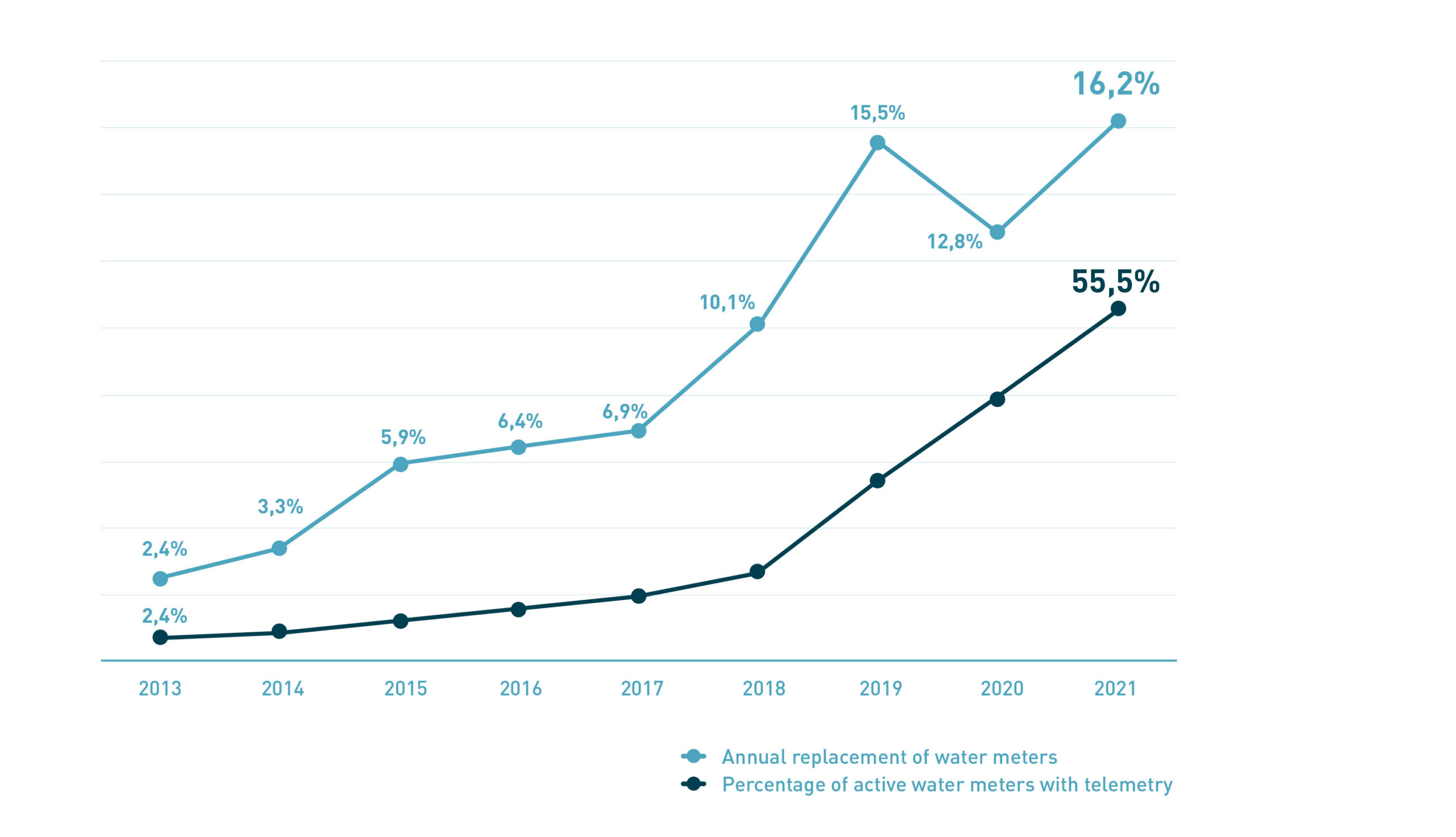
Associated to an increase on the water meters renewal rate there was also a strong investment by AEdP in the installation of a residential telemetry solution believing that this is the future of the sector and the right approach to a strategic and technological WSS management.
Since 2018, AEdP has mostly been installing meters equipped with a telemetry system for collection and remote communication of consumption. In June 2018 only 16% of the entity’s meter park had an integrated telemetry system in a primitive approach to its installation in places of difficult access for manual collection of readings. In June 2021, AEdP has more than 84,000 active meters with this technology, which corresponds to 53% of the Municipality’s Customers meaning a growth of 37% in just three years.
One of the first direct results of this strategic change was the reduction in the need for manual meter readings. Human reading routes were restructured from 20 to 14. The project ended in May 2021 generating annual savings of €150,000 in resources. Along with this optimization the huge increase on real meter readings was another advantage greatly reducing billing estimations.
The residential telemetry strategy materialized not only in the meters, but also in the installation of 15 new macro concentrators for massive collection of Customer consumption data, by area of influence, integration and encryption of data and periodic sending to the data center in the AEdP.
These 15 new macro units are associated with the 16 micro units that already exist in specific points of the urban area materializing the concept of “Porto 100% Telemetry” that transforms the city of Porto into a digital network of concentrators that allows the coverage of practically the whole area.

From a strategic management point of view this technology does not only bring advantages to AedP. Through the App it’s possible to obtain meter readings in real time which allows AEdP to offer a higher quality service and proximity to the customer thus benefiting from an excellent service in the sustainable management of their consumption:
(1) Evolution and daily analysis of consumption
(2) Comparison of consumption with similar periods
(3) Warning of water leaks and anomalous consumption
(4) Water quality data
(5) Notification and Notices of communication from the AEdP (occurrences/anomalies, service suspensions)
(6) Quality of drinking water
(7) Tips for reducing water consumption and sustainable use
Furthermore, telemetry meters do not require constant manual readings, which means that customers do not need this inconvenience. Their monthly bill reflects actual consumption without any associated estimations.
he strategy of strengthening telemetry in the network of active meters in the WSS allows AEdP to have a more technologically advanced management in the public distribution network. When compared to normal meters, the meters provided with telemetry system offer internal advantages such as the analysis of consumption profiles, support for hydraulic modeling and calibration of networks, the reduction of estimated readings, the reduction of losses because the action on anomalies is faster, the increase in productivity due to the possibility of allocating human resources to other functions, more expeditious management
of the meter park and based on real data, detection of water returns and zero consumption, confirmation of illegal activities and consumption below and above the monthly average.
In addition to the aforementioned advantages, this strategy encourages the holistic and integrated management of the Municipality’s WSS as a smart city and allows AEdP a very positive evolution in terms of the management of real water losses in the District Metered Area (DMA). This is done through the refinement of the calculation of the Water Balance of each zone and, as such, efficiently directing resources to actual needs. This is an important change in the current paradigm of attacking water losses and N-RW a strategy that proves to be one of the biggest challenges of the coming times in ensuring maximum sustainability of the WSS.
“Porto 100% Telemetry” is therefore one of several strategic projects that AEdP has been implementing since the end of 2006, with the clear ambition of reducing the N-RW to values close to the economic level of water losses. In 2006 AEdP had a N-RW rate of 52.4% ending 2020 with a rate of 17.1% representing a very aggressive and effective improvement in the WSS. 2020 was also the year in which the highest percentage of telemetry meters installed in customers most of them being read remotely through the installed concentrators and drive-by equipment whose data is very important for the continuous improvement of water losses rates. At the end of 2020, AEdP registered the lowest volume of water losses ever – 9,400 m3/day – and accumulated global savings of more than 63 million euros since 2006.
This management more focused on obtaining information allows customers to gain greater knowledge of their water usage as well as variations in consumption. Associated with this knowledge comes the possibility of a more effective management and a more sustainable use of this increasingly precious and relevant resource.
The future is, therefore, very challenging considering the continuity of the “Porto 100% Telemetry” project and its integration with the other strategies and operations to reduce losses in the WSS, with current N-RW values that place AEdP as a reference to national and international level in the sector, efficient and sustainable service management.
Corporate sustainability is, for Brisa, the only way that gives the planet the opportunity to renew and recover. It is the only way that allows a safe journey for generations to come. And the Brisa Group has opted for this path for a long time. Mainly with regard to the projects and construction of motorways and their operation and maintenance.
More recently, the Brisa Group opted to gain even more speed in the path of its corporate sustainability. It became more demanding and committed to the environmental results achieved. It was for this, including new themes and criteria, until arriving at the system that it adopts today, which has as objective the eco-efficiency of the operations and its support activities. The results obtained so far have allowed it to be ranked in the GRESB 2020 ranking as the most sustainable infrastructure operator in Europe and second in the world. It is worth knowing better the goals achieved by BRISA along its journey towards its corporate sustainability.

The telemetry system developed by JANZ is the partner chosen by Brisa to accompany it on this journey towards the sustainability of the planet, in terms of water efficiency. As a simple and scalable technology, MYWATER is helping Brisa to preserve one of the most important resources on the planet: drinking water. This at a time when the most harmful effects of climate change are already impossible to ignore. At the end of 2020, Brisa decided to equip all its water meters with MYWATER radio modules, having adopted the Narrow Band – Internet of Things communication technology(NB-IoT). Thus, by sending readings and alarms, Brisa has at its disposal a valuable source of information, which allows it to know and resolve its apparent and real water losses, as well as carrying out the water balances of its supply system, thus placing the company on the path of corporate sustainability.
MYWATER is the innovative Telemetry solution based on modern LPWA (Low Power Wide Area) networks. This is a state-of-the-art fixed and bidirectional telemetry solution, aimed at companies and water distributors, which allows interaction without human intervention, with equipment and information systems for an efficient management of monitoring residential commercial and industrial water consumption, public or private.
In addition to effective and efficient management of water supply systems by the Managing Entities, the preservation of this resource requires a profound transformation of the mentalities of those who consume it, that is, of all of us. The challenge is not an easy one, as it never is when it comes to changing habits. By allowing Management Utilities to send information to the end customer about their consumption and events, which go far beyond the monthly water bill, MYWATER can be used as an important motivational tool to generate anew collective mindset. Permanent and real-time information on individual water consumption by the common consumer allows him to monitor the impact on their consumption habits in the monthly bill, modifying them to save money and water and, therefore, also the planet.
MYWATER promises to give the planet the opportunity to recover and renew its resources.
Every Drop counts because water sector is one of the biggest energy consumers
As a global problem, the issue of climate change requires all countries around the globe to collaborate with each other because every drop count when we talk about water efficiency. In 2015 the world leaders agreed on ambitious new goals in the fight against climate change.
The Paris Agreement includes an action plan to limit global warming. The European Union signed and ratified the Paris Agreement demonstrating its strong commitment to its application, having set the goal of being the first economy and society with a neutral impact on the climate by 2050.
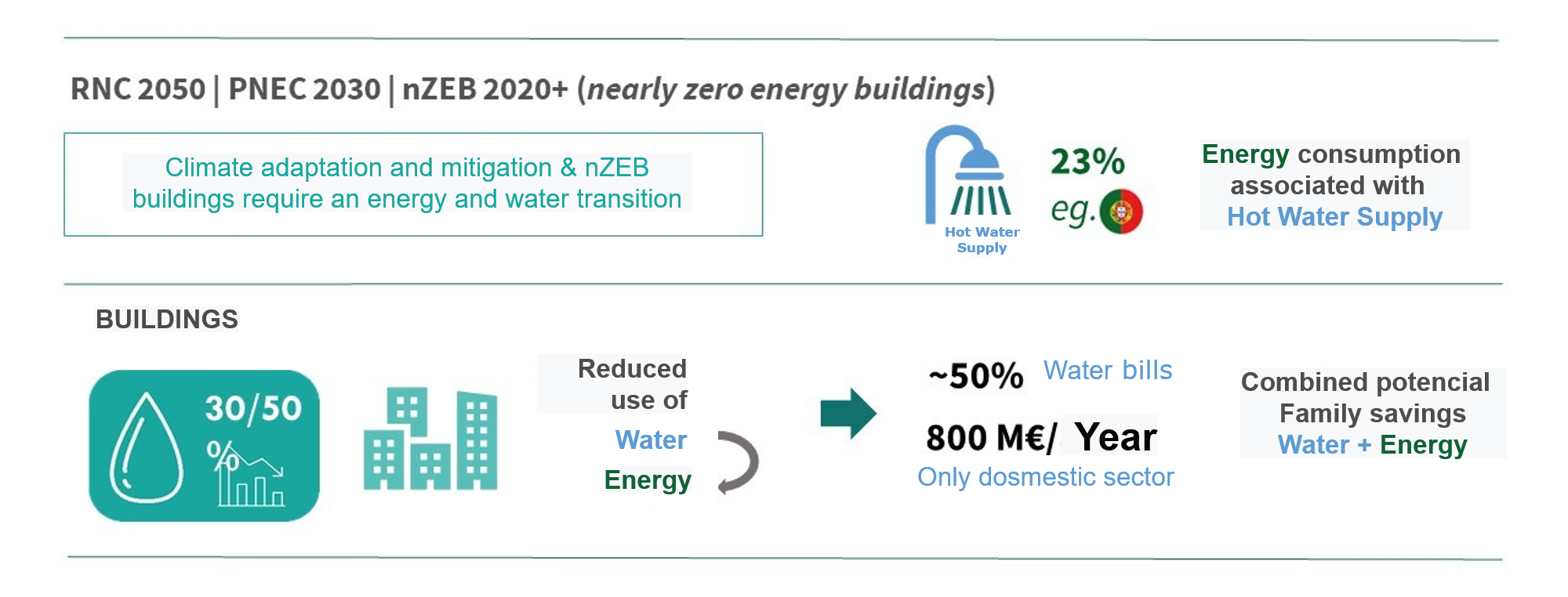
In this objective the urban water cycle plays a very important role. The water sector is one of the largest energy consumers (needs energy to capture, treat and distribute water) and given the high residential energy consumption for water heating (corresponding to approximately 23% of the energy bill), in order to achieve the goal in terms of decarbonization it is important to consider that every drop counts to optimize the management and use of water in these sectors, mostly on the water transition along with the energy one. This water transition has great potential in buildings with benefits for the environment, energy and economic sustainability of the country and families (see Figure 1).

What can be done to make a building more sustainablemfrom a water efficiency point of view?
Droughts and the occurrence of floods are a growing problem in the country and in Europe which test the resilience of cities and the sustainable management of water resources. Using water also requires a lot of energy. The sustainable transition in terms of the conservation of resources decarbonization and climate resilience makes it imperative to develop solutions that promote waste reduction, optimize the use of wate and its reuse in buildings.
In buildings a potential water efficiency of 30% to 50% is estimated depending on their age. The consumption of hot water represents in the domestic sector 23%1 of the energy bill, so the introduction of water efficiency solutions can generate combined savings in water and energy in buildings of more than 800 million euros per year for the Portuguese families.
Responding to these challenges, ADENE launched AQUA+, a simple, agile and voluntary system for evaluating and rating the water efficiency of buildings.
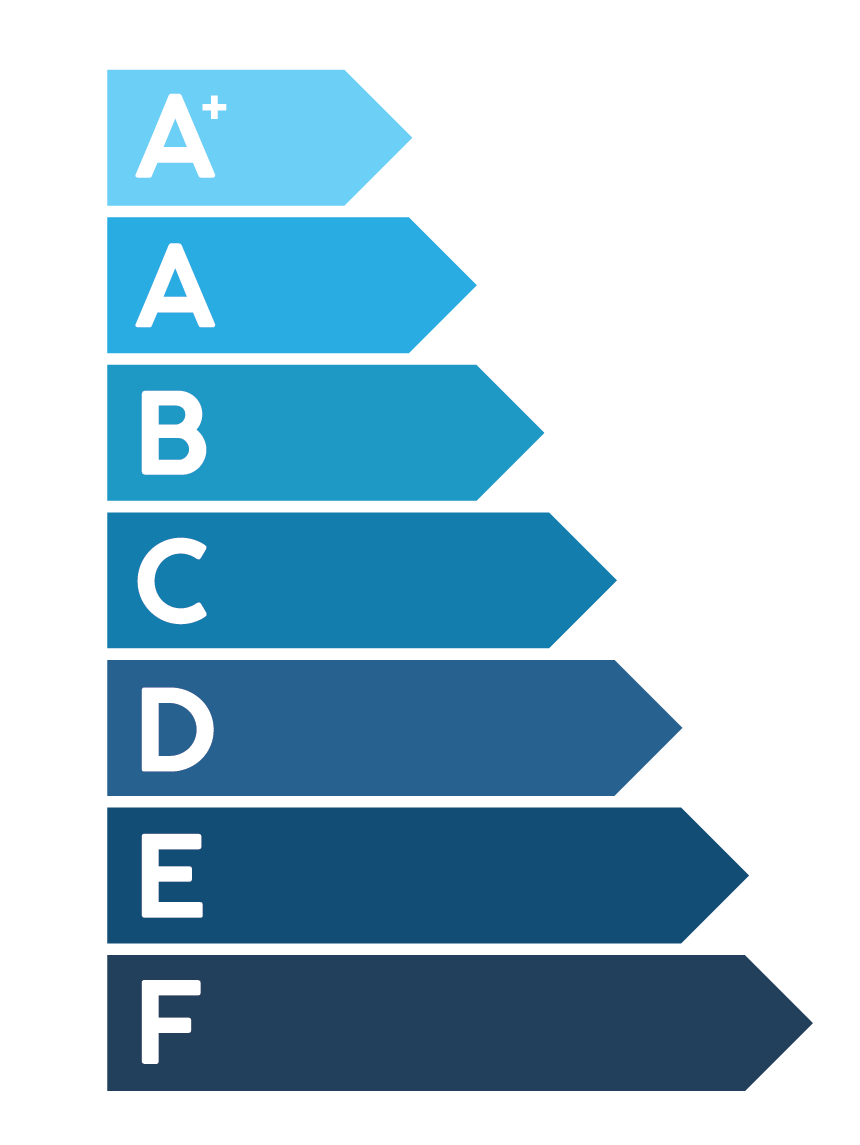
AQUA+ meets the objectives and actions foreseen in the National Program for the Efficient Use of Water, in the Roadmap for Carbon Neutrality 20501, in the 2030 National Energy and Climate Plan2, in the Public Administration Resource Efficiency Program for 20303 (ECO.AP 2030)4, in the Long-Term Strategy for
Renovation of Buildings (ELPRE)5, in the Wave for the Renovation of Buildings (an initiative under the European Ecological Pact), and in the New Action Plan for the Circular Economy of the European Union.
AQUA+ is the result of H2ODesign, a participatory process started in September 2018 which involved consumers, experts and stakeholders in a collaborative approach to the design of new approaches for the efficient use of water. The system was implemented with the collaboration of entities of the national scientific and technological system (SCTN) and technical-scientific associations throughout 2019.
In addition to the Water Class, AQUA+ provides information to the consumer/real estate developer regarding the performance of the property with regard to infrastructure, equipment and devices (installed or in project), namely: water sources and networks, outdoor uses, device efficiency, washing equipment (dishwashers and washing machines) and domestic hot water (Figure 3).
Improvement measures to be implemented to reduce water consumption and associated energy consumption are also identified, giving an indication of the potential for saving water and water + energy.
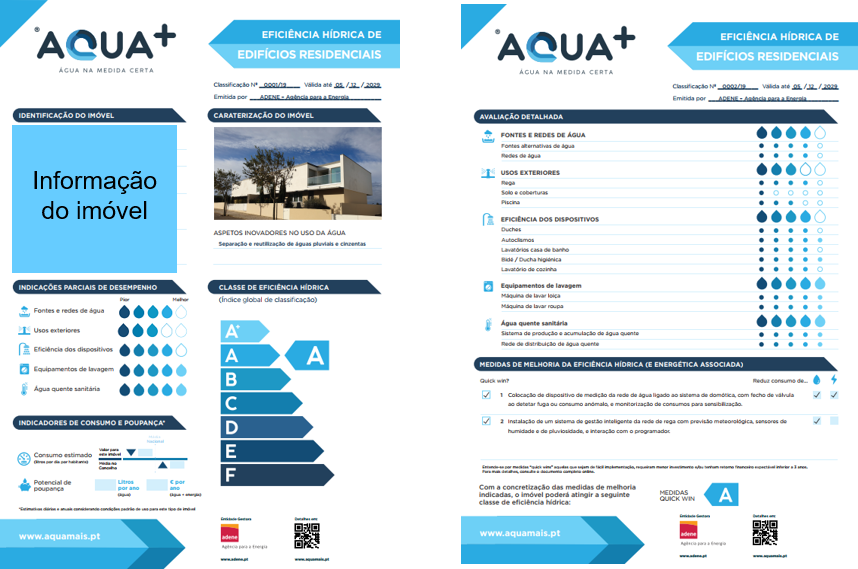
Considering a family of 4 people and an average water price for a municipality with a high population density it is possible to obtain, by replacing conventional showers, toilets and taps with new ones with more efficient features, savings of approximately 196 thousand litters of water per year. These savings translate into a reduction of €227 per year in the water bill.
The purchase of an efficient dishwasher, when it does not exist, will also save water. By using the dishwasher instead of washing dishes by hand you can save up to 16,000 litters of water per year. This results in a reduction of €19 per year in the water bill.
In order to support the informed choice of users so thar every drop counts, ADENE created the AQUA+ saving tips, which aim to guide consumers and technicians in the proper selection of products (cisterns, shower systems, faucets and outdoor uses, such as irrigation systems) and present solutions for the sustainability of buildings.
From the total of residential property audits carried out, it appears that:
/ About 38% of properties manage to go from Classes F to C to B to A+;
/ The potential for reducing consumption varies between 30 and 40%, with an average of 38% considering 2020 data (estimates based on standard values for water use);
/ The implementation of all improvement measures, in all properties audited since the beginning of the system, would result in a total saving of almost 4 million litters of water/year.
AQUA+ is based on the AQUA+ Ecosystem, created to boost water efficiency in buildings. As a key element for the replicability and scale of AQUA+, is included the technicians training and qualification who act as AQUA+ consultants and auditors. Their qualification and training ensure the dissemination and application of AQUA+ throughout the country and the creation of new opportunities for professionals and entrepreneurial companies with more than 150 AQUA+ technicians trained.
The 1st Edition of the AQUA+ Awards (2020) expanded the ecosystem with the Tech AQUA+ Network, an informal network for the dissemination of intelligent water monitoring and control solutions and technologies for users in different applications (buildings and other urban spaces), in particular those that contribute to a better AQUA+ water classification in different types of buildings and uses.
The AQUA+ classification methodology intends to encourage the growing integration in buildings and urban uses of water and technologies that help consumers and managers of different types of buildings and uses to make a more efficient use of water also contributing to the improvement of behaviors in different contexts. In this context AQUA+ values the existence of systems for measuring, monitoring and/or managing water consumption.
These are fundamental solutions for the innovative evolution path towards the future AQUA+ 4.0 based on a dynamic approach and for a more intelligent water management in the different types of buildings and other urban uses and for which the entities of the TECH AQUA+ Network already help to answer. Initiated with the finalists of the AQUA+ 2020 Awards, this Network will soon be extended to other entities with solutions and technologies for monitoring and intelligent control of water in different applications.
Alongside these entities, others including water service management entities are taking important steps to help users to better understand and manage their consumption. Meet one of these entities in this edition.
Born from a participatory process AQUA+ maintains its strong collaborative approach and the involvement of everyone. In 2021 the AQUA+ Commitment Network was set up including 30 institutions of governance and institutional and sectoral representation in the country (others will join in a continuous cycle), which contribute to the strong implementation of this instrument of water efficiency in Portugal.
The extension of AQUA+ to other types of buildings is underway: to the tourism sector (Hotels), already under development in partnership with Turismo de Portugal and scheduled for launch in the fourth quarter of 2021; and commercial and service buildings, including public buildings, in 2022.
References:
Jaime Melo Baptista
President of LIS-Water, Lisbon International Centre for Water
The development of Portuguese society presupposes the existence of excellent water supply services, which implies the construction of important infrastructure components, with functions of capture treatment, elevation, adduction, storage and distribution.
We want effective water supply services that promote physical accessibility, continuity, reliability, water quality, safety, resilience, equity and affordability. We want efficient water supply services that promote good governance and the structuring of the sector, organization, modernization and digitalization of the managing entities, a proper management and allocation of financial resources, water efficiency, energy efficiency and decarbonization. Fulfilling these two objectives, it is possible to provide services to the population at an economically affordable price.
More recently, a third concern has emerged, the need for sustainable water supply services. Sustainability means the use of natural resources to satisfy present needs that do not compromise the satisfaction of the needs of future generations. But what does it mean in practical terms when applied to water supply services? It means that its good management is ensured in a long-term perspective, at the infrastructural, economic and financial, environmental, human capital and knowledge and innovation levels, always maintaining an adequate performance and thus also benefiting the next generations. Let’s look at each of the five levels mentioned.
Water Utilities must ensure infrastructure sustainability by maintaining the value of infrastructures and adopting good practices in their asset management, with more sustainable decisions in the long term. In fact, it is here that the biggest future investments in the sector will take place. A specific but relevant aspect is the need for periodic replacement and calibration of water meters by Utilities, namely to avoid under-invoicing of the service. It is also necessary to complete macro-measurement, telemetry and warning systems. Without measurement no basic information for the services management is available, namely in terms of water balance.
Entities must ensure their full economic and financial sustainability through the recovery of expenses from revenues essentially coming from tariffs and eventually from taxes and transfers. To this end, they must ensure good economic and financial performance, autonomous accounting reporting and a low level of indebtedness. They must also minimize non-revenue water to avoid turnover reduction.
Entities must ensure environmental sustainability in the use of natural resources necessary to provide the service, such as water, energy, reagents and construction materials. Sustainability in water use can be achieved by opting for alternative sources subject to less water scarcity, but also promoting water efficiency throughout the supply infrastructure and also encouraging efficient final water consumption. Sustainability in energy uses can be achieved by promoting energy efficiency and decarbonisation. Sustainability in reagents uses can be achieved through adequate efficiency in the management of muds and reagents and their eventual reuse. Sustainability in the use of building materials can be achieved by practicing a more sustainable construction, properly selecting materials and components, and reducing the production of trivial and hazardous waste.
Entities must ensure the sustainability of human resources, in terms of qualification, diversity of training and age balance, improving attraction and retention mechanisms namely of a salary nature, merit incentive and continuous training.
Entities must ensure the internalization of knowledge and the promotion of innovation in the sector, as factors of competitiveness and differentiation in the national and international context. Associated with them the business and economic valuation of the sector is an essential component for its development, creating jobs and wealth, promoting the consolidation and dynamization of what already exists, ensuring greater self-sufficiency in the sector’s national value chain, creating opportunities and opening up new areas of business expansion.
All this complexity on the path to sustainability requires good governance, with an adequate public policy, competent regulation and effective, efficient and sustainable service management.
The reuse of graywaters means that humanity has finally become aware that the amount of water available on earth does not change, that we drink the same water that the dinosaurs drank and that water is not, after all, a good acquired at birth. But what are graywaters after all? And how can graywaters help to ensure the balance of water ecosystems?
We live on a planet covered in water. However, more than 97% of this water is salty and about 2% is retained in the form of ice and snow. Ultimately, humanity has less than 1% to irrigate crops, to supply industry and for domestic consumption. If the percentage of available water is already small, things tend to get worse if we consider that the world’s population continues to grow.
As Man abandons the myth of the infinite generosity of the earth, measures emerge to obtain a more efficient use of water. Water conservation is one of our civilization’s greatest challenges. Reducing consumption and reducing losses are among the most used measures. However, the reuse of graywaters is also assuming its importance to ensure that, in the future, the water will continue to flow in the taps of our children and grandchildren.
Graywaters has a low content of organic matter, nitrates and phosphates, as well as a reduced bacteriological component. This is why water from sinks and dishwashers is normally excluded from the classification of graywater. With higher levels of organic matter, as well as fats, oils and detergents, their reuse requires a more complex and costly treatment.
Graywater has a low content of organic matter, nitrates and phosphates, as well as a reduced bacteriological component. This is why water from sinks and dishwashers is normally excluded from the classification of graywater. With higher levels of organic matter, as well as fats, oils and detergents, their reuse requires a more complex and costly treatment.
In the domestic system, the reuse of graywater makes it possible to reduce the need for drinking water by about 50%. Surprised? If we think that these graywaters can replace drinking water from toilets, pre-washing clothes and dishes, watering and washing patios and vehicles, everything starts to make sense. What if we told you that, by its nature, graywater treatment and reuse can be installed in residential and service office areas?
If we consider that a washing machine weighing 7 kg uses, on average, 57 liters of water per wash. And that a 5-minute quick shower sends about 25 liters of gray water down the drain, so you just have to do the math.
In 850 BC a stone engraved what, from then on, became official…
The use of rainwater is an ancient process and there is a rock that proves it. Known as Moabite Stone or Mesha Stele, it was found in the Middle East and dates back to 850 BC It contains the history of a revolt and the conquest of a city without water reservoirs.
After 40 years of offering allegiance to the King of Israel, paying him 100,000 lambs and 100,000 rams with his wool, King Mesa of Moab revolted and triumphed. When he arrived in Qarhoh, he was faced with a serious problem of lack of water in the city, aggravated by the fact that there were no reservoirs. So Moab rebuilt Qarhoh, the wall of forests and the wall of the citadel. It also built its gates, its towers, the King’s House and its water reservoirs. Finally, the wise King ordered his people to build their own cistern in their homes, in order to reuse rainwater, giving to the population the possibility of having a good that is essential for life.
The most learned Mans were amazed when they finally were able to read the complete texts of the Moabite Stone and rank it as the most remarkable monolith ever discovered. King Mesa had erected that stone in honor of his god Chemosh to celebrate Mesa’s deliverance from Israel’s dominion.
On the monolith, Moab boasts of his victory over Israel, of building cities and even a road. Little did King Mesa know that, by recording this event in Moabite Stone, he was also writing the oldest record of the use of rainwater.
Since 1915, we have been working daily to create innovative solutions that preserve, respect and guarantee the future of the planet. In 106 years we have so much to tell…
1915 – While Albert Einstein develops the Theory of General Relativity, in Portugal Bruno Janz has the bright idea to found its company.
1975 – Classified as the year of cooperation and understanding. It was the year of the end of the Vietnam war, of the first space meeting between Russians and Americans and it was also the year that
JANZ establishes the first partnerships for supplying parts for other European metering manufacturers.
2002 – The single currency, the Euro, starts its circulation in Portugal and in Lisbon JANZ also starts a new cycle with its restructuring by business areas.
2012 – CERN announces the discovery of a new elementary particle, the Higgs boson (so called Particle of God) and the Kepler Probe discover 26 planets outside the solar system. Meanwhile, in
the planet earth, JANZ integrates the first Smart City project implemented in Portugal.
2015 – NASA confirms the past existence of water on Mars surface. JANZ confirms the existence of meters with composite bodies JV600 in its portfolio.
2016 – Portugal wins the European Championship JANZ launches the telemetry winner solution MYWATER.
2021 – Scientists predict that 2021 is the year of the Martian discoveries. JANZ is discovered and acquired by SIT and the Italian multinational adds the Water sector to its Smart Metering Gaz
business.

O recurso hídrico é um recurso escasso e estratégico. A evolução demográfica, a crescente urbanização e as alterações climáticas são fatores que contribuem para submeter o recurso hídrico a um stress sem precedentes, no mundo e na Europa. Já hoje 25% da população mundial está em condição de stress hídrico.
Algumas pesquisas dizem-nos que globalmente:
O Sustainable Development Goal 6 (SDG 6) da agenda 2030 da ONU, exige garantir o acesso à água e ao saneamento para todos. Como vimos, estamos muito distantes desse objetivo e somente uma transformação do setor hídrico, usando todas as tecnologias disponíveis pode ajudar nesse sentido.
A sustentabilidade da água pode dar uma dupla contribuição para o sistema do país, estimulando investimentos e, ao mesmo tempo, garantindo o impulso para a inovação sustentável.
Em alguns países, quatro prioridades foram identificadas para promover a sustentabilidade hídrica ao longo de toda a cadeia de abastecimento de água:
> Racionalização do uso da água
> Maior reciclagem / reutilização de água
> Racionalização da produção de águas residuais não recuperáveis
> Eficiência dos sistemas de monitorização do uso da água
Utilizando sistemas de telemetria e telegestão é possível controlar com precisão as redes de distribuição e assim facilitar o cumprimento de todos os objetivos acima mencionados.
Estatísticas mundiais mostram que o setor da água é o último em termos de tecnologias e transformação digital. Os contadores inteligentes cobrem apenas 9% do parque total instalado, enquanto os contadores de gás representam 11% e os contadores elétricos inteligentes 31%. Alguns países já decidiram adoção obrigatória de contadores inteligentes para gás e eletricidade. Não conheço nenhum país com a mesma decisão para a água.
Algumas tecnologias para contadores inteligentes de água e gás são exatamente as mesmas como é o caso, por exemplo, das relacionadas com a comunicação. A parte metrológica é específica, mas também nesta área a experiência do gás permite importantes sinergias tecnológicas. Um dos motivos estratégicos da entrada da SIT no setor hídrico é justamente a possibilidade de explorar o knowhow já desenvolvido para o gás também para o setor hídrico. Muito se tem falado sobre o potencial de implementação de sistemas de telemetria no setor da água. Neste contexto, especificamente em Portugal, ainda há um longo caminho a percorrer.
A introdução da telemetria requer investimentos importantes e este é provavelmente o principal obstáculo para uma introdução rápida desta nova tecnologia. No entanto, os investimentos necessários diminuem todos os anos e a experiência já adquirida na área da eletricidade e do gás a nível mundial pode ajudar países como Portugal a fazerem as escolhas corretas, em termos de tecnologia e abordagem de mercado, para uma implementação eficaz e mais fácil das novas tecnologias.
O setor da água tem agora uma grande oportunidade para contribuir para um mundo melhor. Num cenário pressionado do ponto de vista ambiental e socioeconómico, e profundamente alterado devido à emergência sanitária, a União Europeia tenta dar as respostas necessárias a um reinício resiliente e sustentável.
Além do plano Next Generation EU, existem inúmeras iniciativas nascidas no contexto europeu e em linha com o Acordo Verde, relevantes para o setor da água.
Por isso, estou confiante de que em breve veremos investimentos importantes para o setor da água e eles permitirão a transição digital que almejamos.
